
[SUPER Famicom] Released on November 21, 1990! Looking back at the history and masterpieces created by the SUPER Famicom—a true divine artifact that dramatically enhanced the gaming experience while succeeding the Famicom!
[SUPER Famicom] Released on November 21, 1990! Looking back at the history and masterpieces created by the SUPER Famicom—a true divine artifact that dramatically enhanced the gaming experience while succeeding the Famicom!
2025-11-21
[SUPER Famicom] Released on November 21, 1990!
Looking back at the history and masterpieces created by the SUPER Famicom
—a true divine artifact that dramatically enhanced the gaming experience
while succeeding the Famicom!
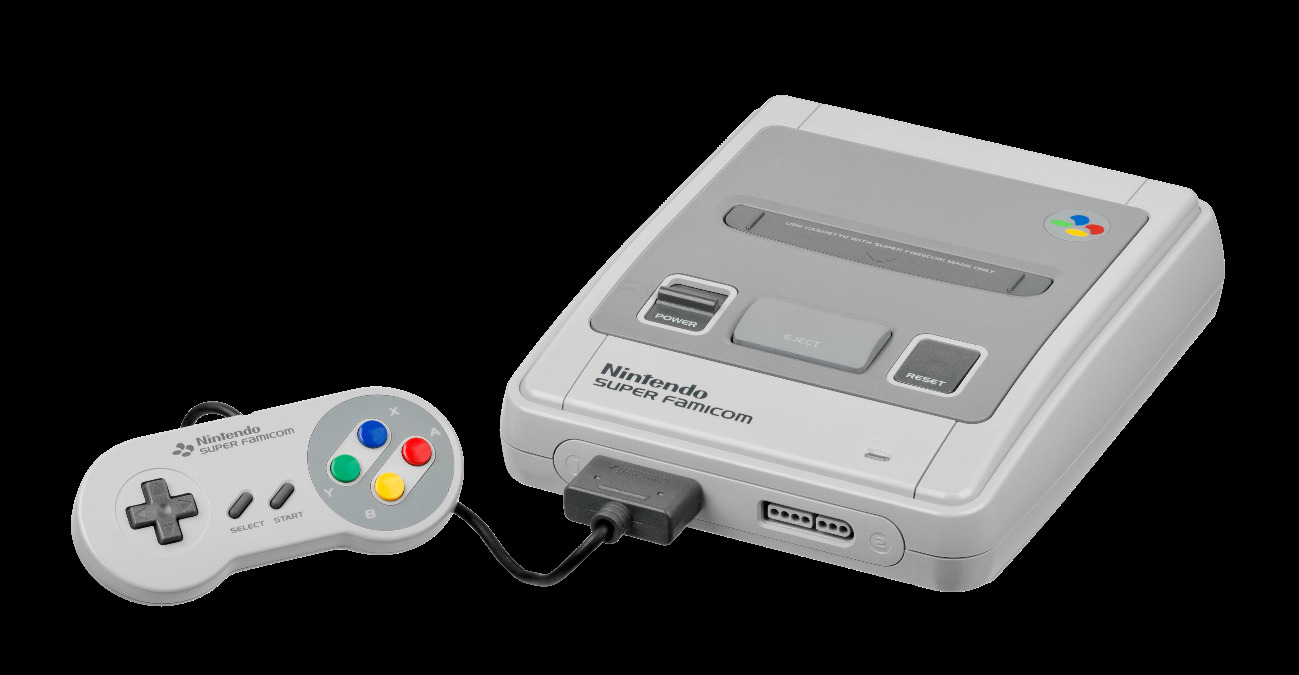
On November 21, 1990, the times quietly shifted. The Super Famicom—or “Sufami” for short—was released as the successor to the original Famicom. The arrival of this new home console instantly captured the hearts of game fans, from children to adults. The world, which had been 8-bit, evolved into 16-bit, dramatically upgrading the beauty of the visuals and the depth of the gameplay. Because the release was postponed once, anticipation and imagination had built up excessively among children, making the console’s debut an event that brought joy and, at the same time, heralded the start of a new era.
When many people first held the Super Famicom, they must have been surprised by its surprisingly simple configuration: the console and two controllers. That was it. The reason the AC adapter and TV connection cable were not included was that they were designed to be compatible with the items from the previous generation Famicom. This mechanism, which could be called the “aesthetics of reuse,” seems very characteristic of Nintendo in retrospect. Because of the flexibility for users to select only what they needed, many audio enthusiasts used separately sold AV cables or S-Video cables to enjoy higher quality sound and visuals.
One of the biggest reasons the Sufami suddenly gained attention was, without a doubt, the “screen movement.” Zooming, shrinking, and rotation. The Super Famicom was unique in its ability to utilize these three functions naturally as an integral part of the game. In “F-ZERO,” the course warped and the camera rotated amidst overwhelming speed, allowing players to experience a sense of presence as if they were on a roller coaster. Furthermore, the floating screen composition of “Pilotwings” was only possible thanks to this capability. It can be said that the Super Famicom was the first home console that didn't just look amazing but gave users the sensation of “being inside the game.”
The Super Famicom’s musical expression capabilities made a huge leap from the Famicom era. The ability for 8-voice simultaneous sound generation allowed for grand, cinematic scores and delicate, beautiful melodies that further deepened the game's world view. What remains personally unforgettable is the heavy, orchestral-style music of “ActRaiser.” The impact of the opening stage, enveloped in that solemnity, is still etched in my memory. Many players of “Final Fantasy V” likely enjoyed the luxury of simply staring at the title screen and listening to the music. The Sufami’s music was truly a piece of art that transcended the bounds of a game.
Another innovation of the Super Famicom was the evolution of its control system. In addition to the Famicom’s simple A and B buttons, four new buttons—X, Y, L, and R—were added, naturally incorporating index finger operation into a design that fit perfectly in the palm of one's hand. This structure became the foundation for all subsequent game controllers, with its design philosophy carried forward to this day. This layout, born from a deep study of user movement rather than just being an “addition,” achieved both operability and comfort, propelling the gaming experience itself to the next stage.
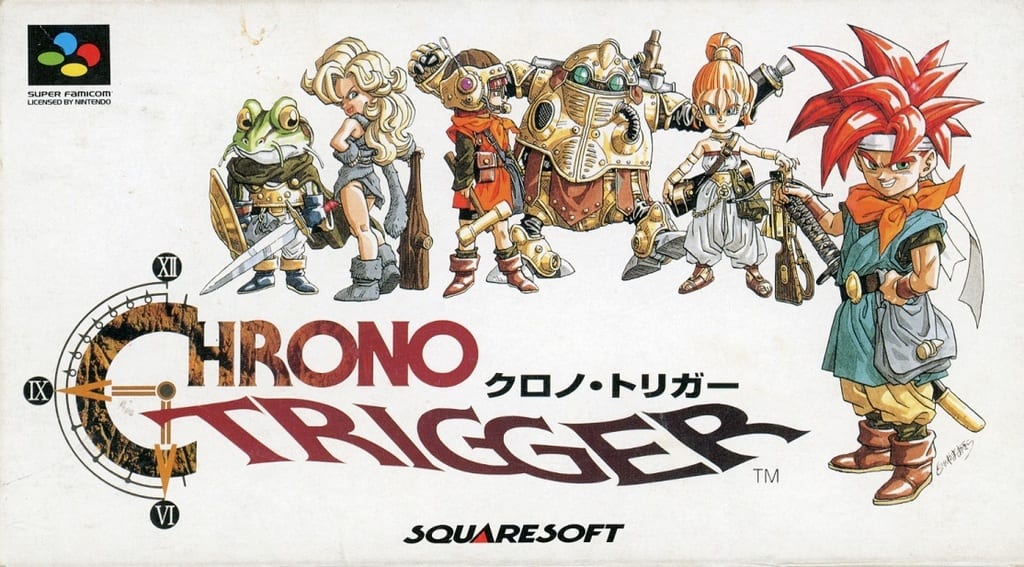
The number of launch titles was just two—”Super Mario World” and “F-ZERO.” However, the subsequent development was a torrent of masterpieces. Software that captivated players across all genres was born one after another. What remains unforgettable for me are the grand story and intricate world view of “Chrono Trigger,” the quiet suspense of “Kamaitachi no Yoru,” and the deep, highly replayable addictiveness of “Mystery Dungeon: Shiren the Wanderer.” It's likely that many people feel these games became a part of their lives. The Super Famicom was not merely hardware, but an era unto itself.
If you love games, you must have heard these titles!
Here is the lineup of masterpieces for SUPER Famicom software!
SUPER Famicom
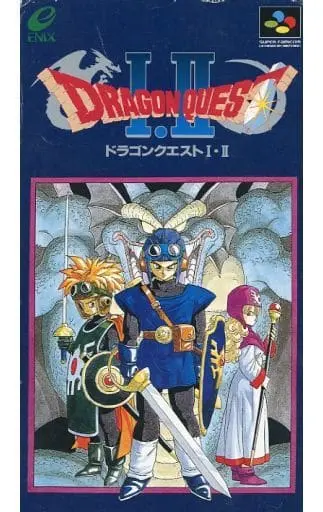
DRAGON QUEST Series
DRAGON QUEST Series
SUPER Famicom
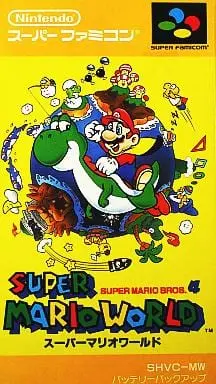
Super Mario World
Super Mario World
SUPER Famicom
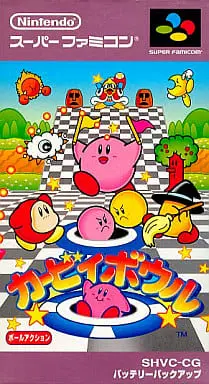
Kirby's Dream Land
Kirby's Dream Land
SUPER Famicom
STREET FIGHTER
STREET FIGHTER
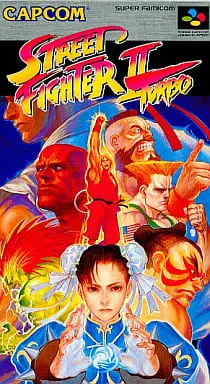
SUPER Famicom
Chrono Trigger
Chrono Trigger
▸
SUPER Famicom,
Video Game Software,
No Box No Manual,
DRAGON QUEST Series,
Chrono Trigger,
Super Mario series,
STREET FIGHTER,
Billiards,
Super Mario World,
Kirby's Dream Course
Related Articles
-
 Front and back of the VTuber industry. Rewind time and overturn the worst ending! Time leap mystery adventure game VIRTUAL ENCORE announced!2026-10-25 Saori
-
 【Benesse】 Actually secretly involved in game development too! What kind of company is Benesse Holdings, Inc., which reigns supreme as the largest educational material manufacturer in Japan?2026-10-18 Saori
-
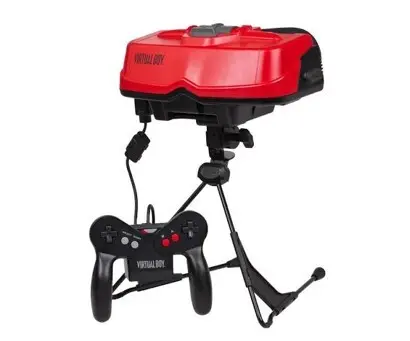 【VIRTUAL BOY】 Released on July 21, 1995! A home console supporting 3D stereoscopic vision that was talked about for being too far ahead of its time! What is the history of the VIRTUAL BOY, whose latest version is also on sale?2026-07-26 Saori
-
 【Panther Software】 A retro lineup featuring PC games, PlayStation, and more! Here is what kind of developer Panther Software was, having released many romance simulation games!2026-07-25 Saori
-
 [Dark Fantasy] The talked-about title is being ported to Switch! Unravel the mystery of the children calling themselves Mamiya! MAMIYA - A Shared Illusion of the World's End - is coming soon!2026-03-28 Saori
-
 [DESIRE] The legendary PC game arrives in a physical edition! DESIRE remaster ver. is now on sale, featuring not only new CGs but also improvements like shortcut buttons and one-touch controls to make the massive scenario easier to read!2026-03-25 Saori
Popular Articles
-
 【Alchemy】 Let's fulfill the taboo alchemy of a father who lost his daughter. My Lovely Daughter Reborn, with numerous further brush-up elements added toward the packaged version, decided to go on sale!2026-10-10 Saori
-
 【Yu-Gi-Oh! GX】 Those battles, friends, and the academy revive packed with additional elements! Equipped with online battle functions, Yu-Gi-Oh! TAG FORCE GX making battles with rivals all over the world possible decided to go on sale!2026-10-07 Saori
-
 【THQ Japan】A Once-Dissolved Game Company Revives as a Brand! What is THQ (Japan), Expanding Globally?2025-03-26 Saori
-
 【VICTRIX】 Now Expanding in Japan! Discover VICTRIX's Top Gaming Devices!2025-03-29 Saori
-
 【TECMO】The Predecessor of KOEI TECMO GAMES! A Company Known for Creating Masterpieces in a Wide Range of Genres, from Simulation to Horror to Fighting Games!2023-11-17 Saori
-
 【TATSUJIN】Named After a Legendary Game! A Rising Game Developer Founded by Former Staff! What Kind of Company is TATSUJIN?2025-03-24 Saori