
[Wii] Released on December 2, 2006! Enjoy the Fun of Reflecting Your Own Movements in the Game with the Nunchuk-Style Remote! What? It’s Already 20 Years Ago??? The Wii Was This Kind of Console!
[Wii] Released on December 2, 2006! Enjoy the Fun of Reflecting Your Own Movements in the Game with the Nunchuk-Style Remote! What? It’s Already 20 Years Ago??? The Wii Was This Kind of Console!
2025-12-02
[Wii] Released on December 2, 2006!
Enjoy the Fun of Reflecting Your Own Movements in the Game
with the Nunchuk-Style Remote!
What? It’s Already 20 Years Ago???
The Wii Was This Kind of Console!
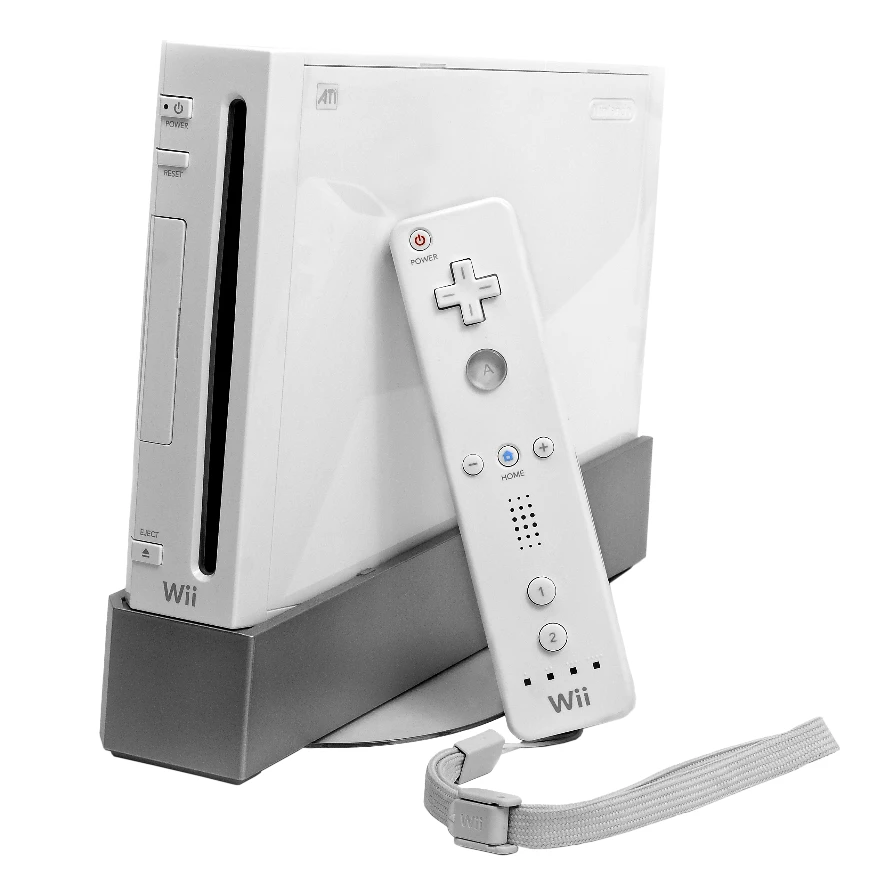
There are probably many people who remember being surprised in the winter of 2006, looking at the sophisticated white casing that resembled a home appliance, and thinking, “Is this really a game console?” While the mainstream design for game consoles at the time was undeniably “console-like,” the Wii's appearance felt not so much like an anomaly but rather a new standard. The vertical stand style, in particular, was a pioneer in creating the feeling that it was “stylish just by being there,” and every time the glowing disc slot signaled the arrival of a message, it made you feel a sense of the future.
What was truly innovative about the Wii was its operability. The sensation that movements like holding the Wii Remote and swinging or twisting it toward the TV were directly reflected in the game—this fundamentally overturned the common sense of gaming at the time. Its flexibility allowed for conventional control styles simply by holding the remote horizontally, and combining it with the Nunchuk made complex two-handed actions possible. From an era of playing only with buttons to an era of enjoying games by moving the body, the Wii turned the player's physical self into “part of the controls.” It is difficult to put into words how great an impact this change was.
The fact that people who were previously unfamiliar with games naturally reached for the Wii—that is the greatest achievement of this hardware. Even those who thought “sports games seem difficult” must have been instantly captivated by the simplicity and exhilaration of the controls when they tried bowling or tennis in “Wii Sports.” Furthermore, the release of “Wii Fit” even changed the image of “games = the cause of lack of exercise.” The sight of people performing fitness and yoga while standing on the Balance Board, which resembled a weighing scale, was already part of a “new lifestyle.”
Another unique experience provided by the Wii was the presence of the avatar creation feature, “Mii.” This feature, which allowed for detailed customization from the face's outline to hair and expressions, went beyond the scope of a mere avatar and drew the players themselves into the game world. A culture of sharing Mii characters that closely resembled celebrities and characters online was born, and many people must have felt as if they were actively participating on the television screen. In particular, the footage of Mii characters marching in an orderly fashion in the “Mii Parade” remains in memory as a unique sight symbolizing the Wii's worldview itself.
A key characteristic of the Wii is that it was a console that reached not only “gamers” but also “non-gamers.” The sight of families gathering in the living room, laughing while enjoying table tennis, parents and children trying fitness challenges together, and even grandparents attempting brain training had become completely commonplace—that was the “family scene” the Wii created. This atmosphere could not be replicated by any other game console, and it speaks to the depth of the Wii’s influence on the era.
Wii
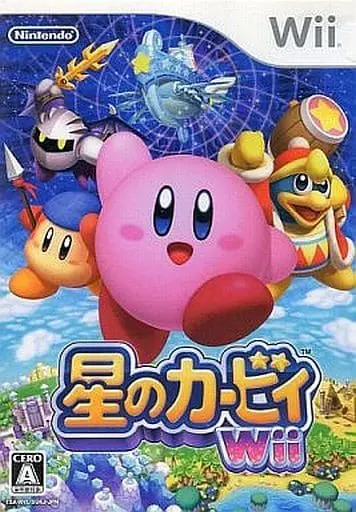
Kirby's Dream Land
Kirby's Dream Land
Wii
Animal Crossing series
Animal Crossing series

Wii
Epic Mickey
Epic Mickey

Wii
Pokémon
Pokémon

▸
Related Articles
-
 [GAME BOY ADVANCE] Released on March 21st! The ”standards” of today's handheld consoles started here! Is one sleeping in your house? This is what the GAME BOY ADVANCE is all about!2026-03-21 Saori
-
 【Nintendo Switch】 Released on March 3, 2017! It’s hard to believe nearly 9 years have passed since the globally popular Nintendo Switch first changed the way we play!2026-03-03 Saori
-
 [Nintendo 3DS] Released on 2/26! A folding console that taught us the joy of passing by others—this is what the memorable handheld Nintendo 3DS was like!2026-02-27 Saori
-
 [Nintendo DS] Released on December 2, 2004! Making Quiz Games Deeper and Simulation Games More Interesting! The History of the Nintendo DS, Where the Dual Game Screens Brought About a Leap Forward!2025-12-03 Saori
-
 【Spike Chunsoft】Many Masterpieces in Mystery & Action Games! Continuously Releasing New Titles in 2023! Spike Chunsoft!2023-11-02 Saori
-
 【HORI】Not just game software......? The gaming peripherals you use might just be made by HORI!2023-10-24 Saori
Popular Articles
-
 【TECMO】The Predecessor of KOEI TECMO GAMES! A Company Known for Creating Masterpieces in a Wide Range of Genres, from Simulation to Horror to Fighting Games!2023-11-17 Saori
-
 【THQ Japan】A Once-Dissolved Game Company Revives as a Brand! What is THQ (Japan), Expanding Globally?2025-03-26 Saori
-
 【VICTRIX】 Now Expanding in Japan! Discover VICTRIX's Top Gaming Devices!2025-03-29 Saori
-
 【3A Company】A Highly Rated Domestic Device Manufacturer! Check Out Recommended Products from 3A Company!2025-03-30 Saori
-
 【TATSUJIN】Named After a Legendary Game! A Rising Game Developer Founded by Former Staff! What Kind of Company is TATSUJIN?2025-03-24 Saori
-
 [DESIRE] The legendary PC game arrives in a physical edition! DESIRE remaster ver. is now on sale, featuring not only new CGs but also improvements like shortcut buttons and one-touch controls to make the massive scenario easier to read!2026-03-25 Saori