
【WonderSwan】 Released on March 4, 1999! What is the history of the WonderSwan, the handheld console featuring trendy-for-its-time functions like registering your name and birthday?
【WonderSwan】 Released on March 4, 1999! What is the history of the WonderSwan, the handheld console featuring trendy-for-its-time functions like registering your name and birthday?
2026-03-05
【WonderSwan】 Released on March 4, 1999!
What is the history of the WonderSwan, the handheld console featuring trendy-for-its-time functions like registering your name and birthday?
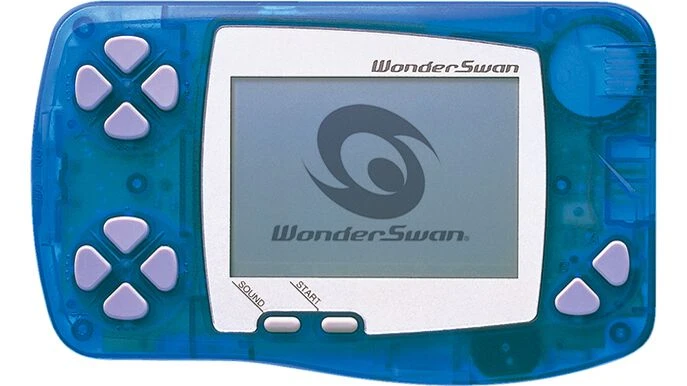
1999 was an era when handheld game consoles were transitioning to color LCDs one after another. With the Game Boy Color and the Neo Geo Pocket Color (released on March 19 of that same year), the market was steering toward vibrant screens. In the midst of this, Bandai (now Bandai Namco Entertainment) released the WonderSwan, intentionally opting for a monochrome LCD. Many at the time likely wondered, ”Why black and white now?” However, that choice is precisely what made the console stand out. Rather than flashiness, it competed on functionality and philosophy—an approach that would later become legendary.
It is widely known that Gunpei Yokoi, hailed as the ”father of handheld gaming,” was involved in the development of this console. Knowing it was hardware touched by the man who created the Game & Watch and Game Boy, it's impossible not to be intrigued by its design philosophy. Rather than engaging in a flashy spec race, the concept of refining ”withered technology” to maximize practicality can be felt throughout the WonderSwan. The lightness felt the moment you hold it, its ease of use, and its minimalist design—a clear philosophy resided there.
The selling points were clear: ”small, light, and affordable.” Its size was slightly more compact than the Game Boy Pocket, and it felt even lighter. The price was 4,800 yen. This was quite low for a handheld at the time, making it accessible even for children. The size, which fit easily into a bag, significantly lowered the psychological hurdle of carrying it around. Being able to take it out casually and play immediately while on the go was a huge draw.
What was surprising was the battery life. The power-saving design, which allowed for about 30 hours of operation on a single AA alkaline battery, defied the common sense of the time. Considering that other handhelds required multiple batteries and had shorter continuous playtimes, this efficiency was outstanding. In an era when rechargeable battery performance was not yet sufficient, the consumption of dry cell batteries was an issue that affected household finances. Greatly reducing that burden must have been a very welcome factor for the users.
Another feature of the WonderSwan was its structure that allowed it to be held both vertically and horizontally. The idea of changing the screen layout depending on the title was quite advanced for the time. Vertical games felt powerful, and vertical-text novel games were easier to read, enhancing the immersion in the story. For example, in Crazy Climber, the sense of scale as you climbed buildings filled the entire screen, and the high visibility was impressive. It wasn't just a gimmick; it was a clever design that expanded the gaming experience itself.
The ability to register a username and date of birth on the console was also somewhat stylish for the time. The act of inputting your own information beforehand made you perceive the console as ”your own personal terminal.” While this seems like a standard feature now, the freshness of experiencing it back in 1999 is something quite unforgettable.
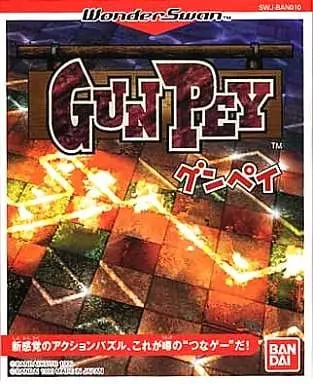
Released alongside the hardware were four titles: GUNPEY, Densha de GO!, Chocobo's Mysterious Dungeon for WonderSwan, and New Japan Pro-Wrestling: Toukon Retsuden. Among them, GUNPEY is known as the console's signature title, captivating many players with its simple yet deep puzzle gameplay. In recent years, a scene in the movie ”Evangelion: 3.0+1.0 Thrice Upon a Time” where Asuka plays a game similar to GUNPEY on hardware resembling a WonderSwan became a hot topic, impressing long-time fans. A similar appearance was also confirmed in ”Evangelion: 2.0 You Can (Not) Advance” released in 2009, quietly asserting its presence within the fictional world.
A WonderSwan that still works today must be quite rare, right......?
I'd love to play if I could get one to work!
Here are some popular WonderSwan titles!
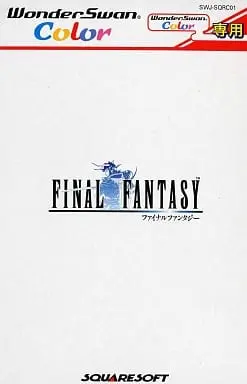
Final Fantasy Series
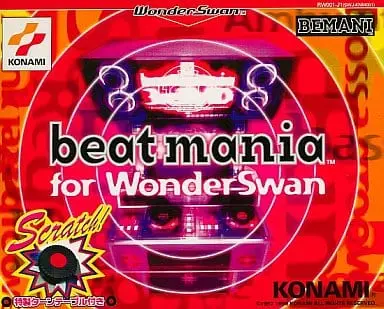
Beatmania
GUNPEY
▸
WonderSwan,
Final Fantasy Series,
Densha de GO!,
GUNPEY,
Crazy Climber,
Beatmania,
Chocobo's Dungeon,
Shin Nippon Pro Wrestling: Toukon Retsuden
Related Articles
-
 【PS2】 Released on March 4, 2000! Recording phenomenal sales of 155 million units worldwide, the PS2 popularized beautiful graphics and new gaming experiences across the globe!2026-03-04 Saori
-
 [PSP] Released on December 12, 2004! A truly dream next-generation console equipped not only with gaming functions but also video and music playback! What kind of console is the PSP, which celebrated its 20th anniversary?2025-12-11 Saori
-
 [PlayStation] Released on December 3, 1994! Launched Just 10 Days After the Sega Saturn, It Showed the World the Depth of 3D Expression! This is the PlayStation Console!2025-12-04 Saori
-
 【Nihon Bussan】 Hit 1980s Arcade Cabinet Game “Crazy Climber” as a Flagship Title! What Kind of Company was the Once-Existent Nihon Bussan?2023-12-07 Saori
-
 【TAITO】 The Legendary Game Maker! The Company Behind That Iconic Shooting Game! TAITO: An Overview of the Company!2023-12-06 Saori
-
 【SQUARE】Now famous as SQUARE ENIX! What masterpieces did the game maker SQUARE, which once existed, produce?2023-10-26 Saori
Popular Articles
-
 Magical fantasy RTS is revived beautifully! In addition to high resolution, new systems such as "Great Magic" with the power to turn the war situation around and a "Skill Tree" to strengthen familiars are added! GrimGrimoire OnceMore appears on Switch!2026-09-07 Saori
-
 [Epic Records Japan] Once collaborated with Nintendo to develop video games! What kind of titles did this now-inactive game division of Epic Records Japan release?2025-06-11 Saori
-
 [DESIRE] The legendary PC game arrives in a physical edition! DESIRE remaster ver. is now on sale, featuring not only new CGs but also improvements like shortcut buttons and one-touch controls to make the massive scenario easier to read!2026-03-25 Saori
-
 [TECHNICAL GROUP LABORATORY] Developing game software as part of its operations! Let's unravel the history of the long-established communications company, TECHNICAL GROUP LABORATORY!2026-04-10 Saori
-
 【3A Company】A Highly Rated Domestic Device Manufacturer! Check Out Recommended Products from 3A Company!2025-03-30 Saori
-
 【TATSUJIN】Named After a Legendary Game! A Rising Game Developer Founded by Former Staff! What Kind of Company is TATSUJIN?2025-03-24 Saori