
The latest in a combat simulation series with over 40 years of history! Enjoy expanded strategies with turn-based thinking, diverse units, and a wealth of stages! Daisenryaku (Great Strategy) SSB2 is out now on Switch2!
The latest in a combat simulation series with over 40 years of history! Enjoy expanded strategies with turn-based thinking, diverse units, and a wealth of stages! Daisenryaku (Great Strategy) SSB2 is out now on Switch2!
2026-03-15
The latest in a combat simulation series
with over 40 years of history!
Enjoy expanded strategies with turn-based thinking, diverse units,
and a wealth of stages!
Daisenryaku (Great Strategy) SSB2 is out now on Switch2!
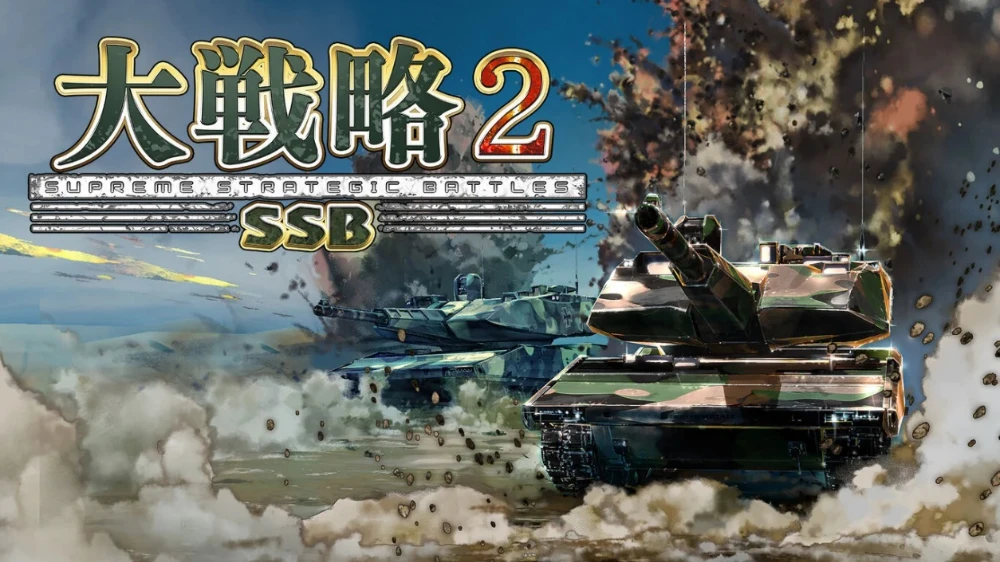
”Get fired up. Strategy is personality.” — This single sentence alone makes you want to spread a map across your desk; that is the essence of ”Daisenryaku SSB2.” This long-established war simulation series, running since 1985, provides diverse battlefields where up to four factions clash, setting the stage where victory or defeat is determined by ”your very way of thinking.” It’s not the type of game that pushes through with flashy effects; instead, the process of reading the situation, organizing the turn order, and constructing a path to victory is the main star. Furthermore, in this installment, the system has evolved and the map structures have become three-dimensional, raising the density of tactical reading to a new level. Even when you say ”attack,” whether you push forward on land, cross the sea for a landing, or strike after seizing air superiority, the fact that these choices directly reflect your personality and preferences is what makes it so interesting.

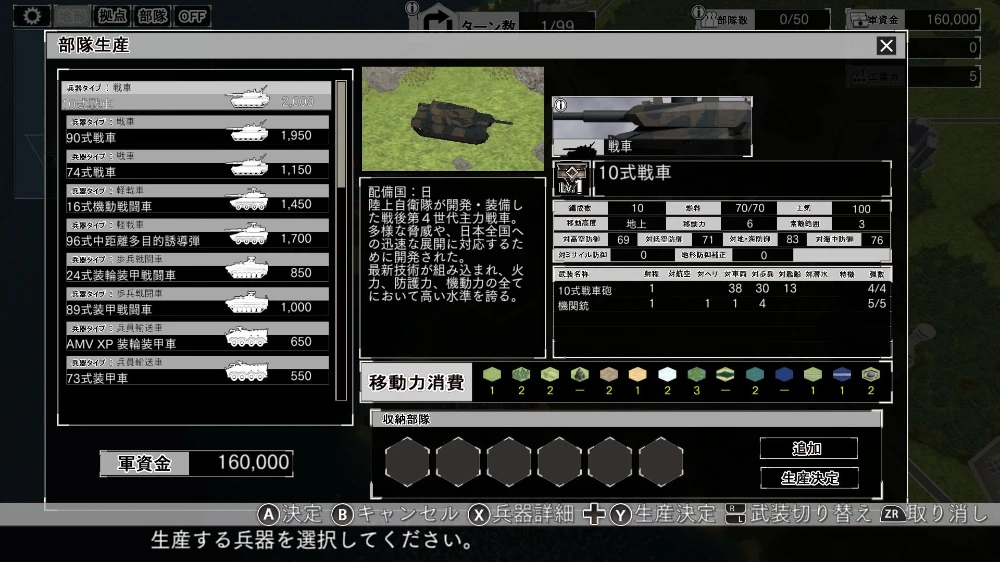
Hearing that there are over 300 types of weapons might make it seem like it’s just about the quantity, but the point of this work lies in the fact that ”a wide range of applications are available, centered on modern weaponry.” Not only are there star players like fighter jets and tanks, but even amphibious assault ships and anti-submarine patrol aircraft are prepared, and next-generation weapons currently under development also make an appearance. This naturally fosters the idea of ”solving this battlefield challenge with this specific tool.” For example, on a map separated by sea, you won't get anywhere even if you gather all the land combat weapons, and in waters where submarines lurk, a formation without anti-submarine power leaves you uneasy. In this way, the weapon list functions not as a mere collection, but as a dictionary supporting your operational plans. It’s fair to say that the game has already begun the moment you start thinking, ”What would I make my core strength?”
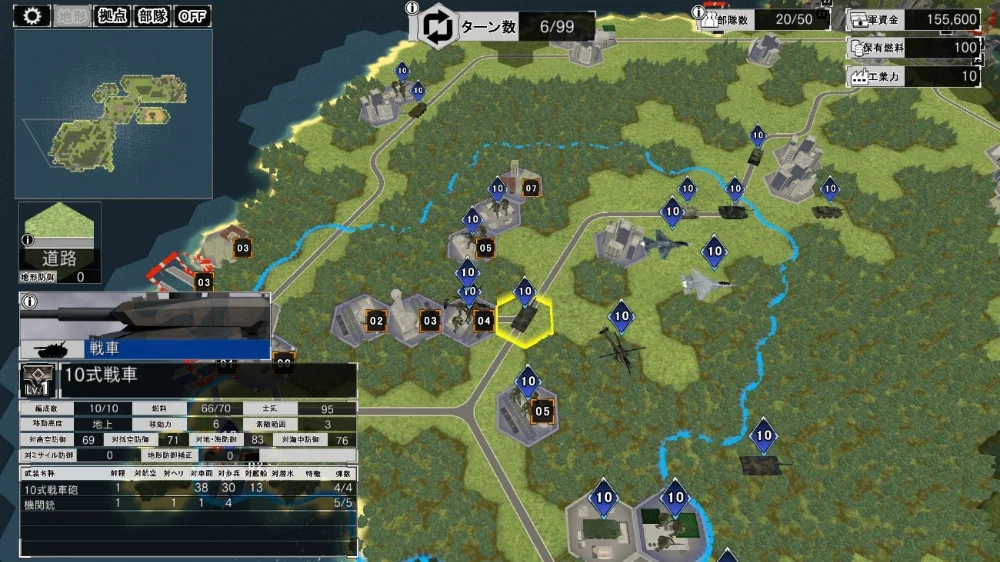
Having 54 types of initial maps is attractive not only because it broadens the scope of play, but also because it shakes up your thinking habits. You might grasp the feeling of a short-term decisive battle on an easy-to-play small island map, only to be confronted next by the weight of supply lines and base suppression on a large-scale map intended for total war. Furthermore, in settings mindful of historical battles or modern geopolitics, the ”meaning of holding key points” is felt more strongly than simple annihilation. Even with the same weapons, their value changes depending on the terrain, the length of the front line, and the presence of sea areas, which is a great point because the answer for a walkthrough is rarely fixed to just one. Realizations like ”I won with an air-force-centric approach last time, but the sea is getting in the way this time” link directly to your next formation and operation.
The battlefield is composed of hexagonal hexes, featuring a turn-based system where the player and CPU act alternately under the same rules. This is the core of the game's satisfaction; it is designed so that you win through an accumulation of judgments rather than reflexes. Organizing a fleet to cross the sea, seizing the sky with aircraft, and repainting the area with ground units—because you move forward while considering the ”best move right now” every turn, the reasons remain clear whether you win or lose. The feeling of reflections like ”I let the bombing through because I put off air superiority back there” or ”I should have conserved fuel instead of rushing that one step” increasing the precision of your next move is the true essence of a game played thoroughly.
One reason the strategy in this installment has become deeper is that map elevations are expressed in five levels, requiring three-dimensional offensive moves across land, sea, and air. Actions such as bombers targeting the enemy's heart from high altitude or submarines lurking underwater for a surprise attack are no longer mere flavoring but easily function as ”actual paths to victory.” Furthermore, since industrial power and fuel reserves are introduced as strategic resources, pushing forward with momentum alone will lead to running out of steam at some point. Whether you solidify your footing and prepare a production base or seize vital points early to reduce the opponent's options—these decisions significantly shift the state of the war, and the correct answer changes depending on the situation. Moments arrive repeatedly where your courage as a commander is tested, rather than flashy visuals.
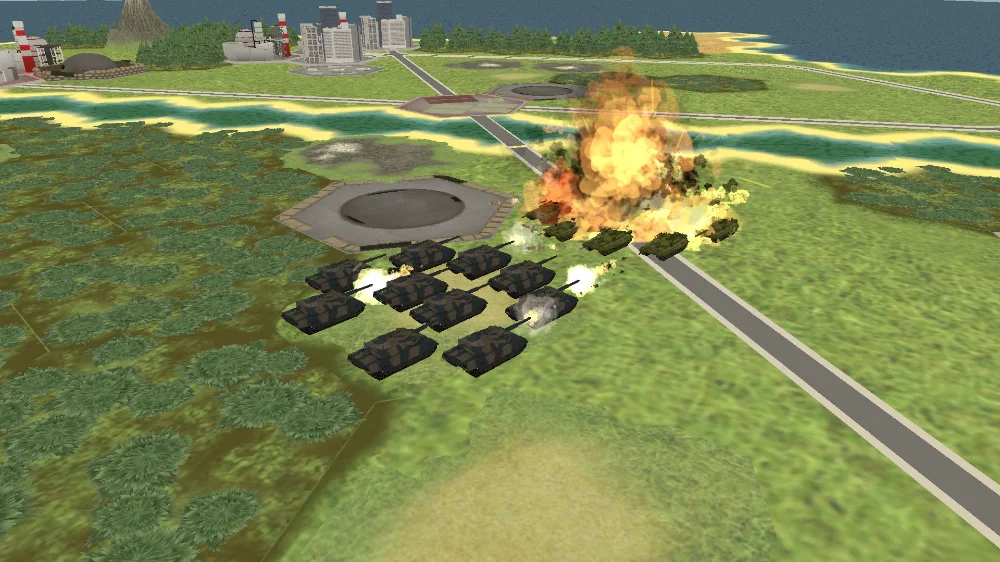
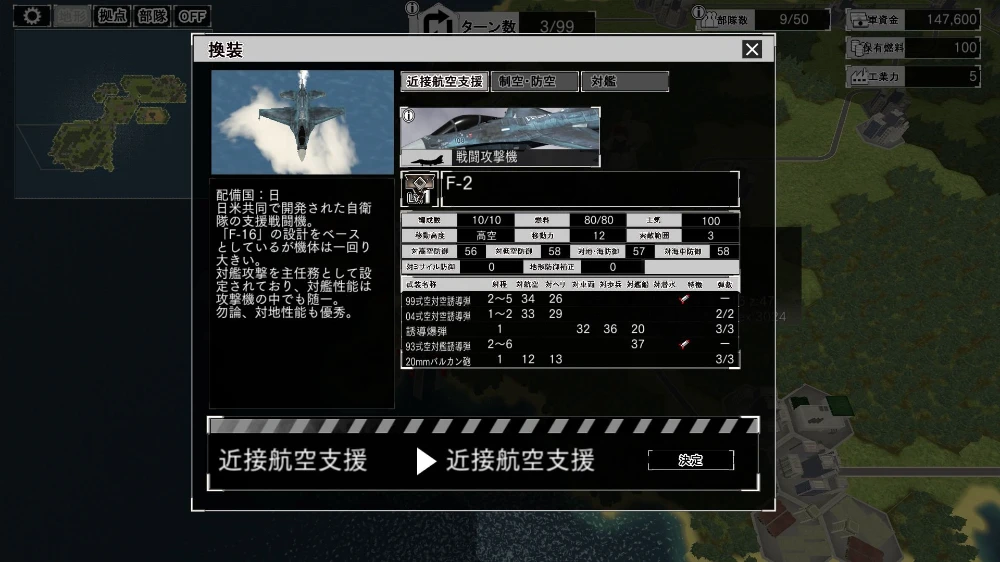
Weapon performance has become more detailed, including elements like ”armament” and ”anti-missile defense,” and with the addition of weapon types such as bombers, fighter-attack aircraft, and anti-submarine patrol aircraft, the intent of your formation can be expressed more clearly. The inclusion of ”Armament Swapping,” which allows you to change abilities according to the operation, is a welcome feature; the idea of switching roles for the same aircraft depending on the mission arises naturally. On the terrain side, factories, refineries, radar bases, snowfields, and wetlands have been added, so the place where you fight itself acts as a ”strategic condition.” As decision-making increases—such as whether to take a radar base to gain an advantage in scouting or secure a refinery to gain superiority in fuel—victory is felt not just as combat strength, but as the skill of the entire operational design.
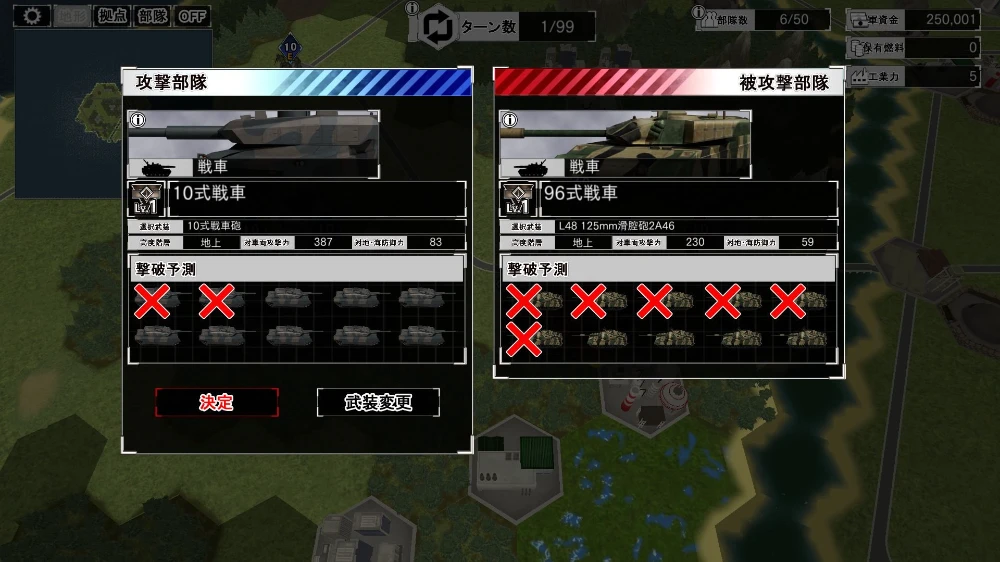
”Daisenryaku SSB2” is a game where the player's preferences are etched onto the board as results. Some may advance only after carefully arranging supplies and production, some may seize key points at a good tempo by holding air superiority, and others surely will be drawn to a fighting style that breaks the opponent's spirit with submarines. Every way of fighting reveals ”that person's individuality,” and I feel that the reason this series has been loved for so long is that you can accept the outcome—not just when things go well, but even when things fall apart—as the ”accumulation of your own judgments.” On a night when you want to experience intellectual excitement or a holiday when you want to get a little fired up, this software gives you a quiet nudge.
Daisenryaku SSB
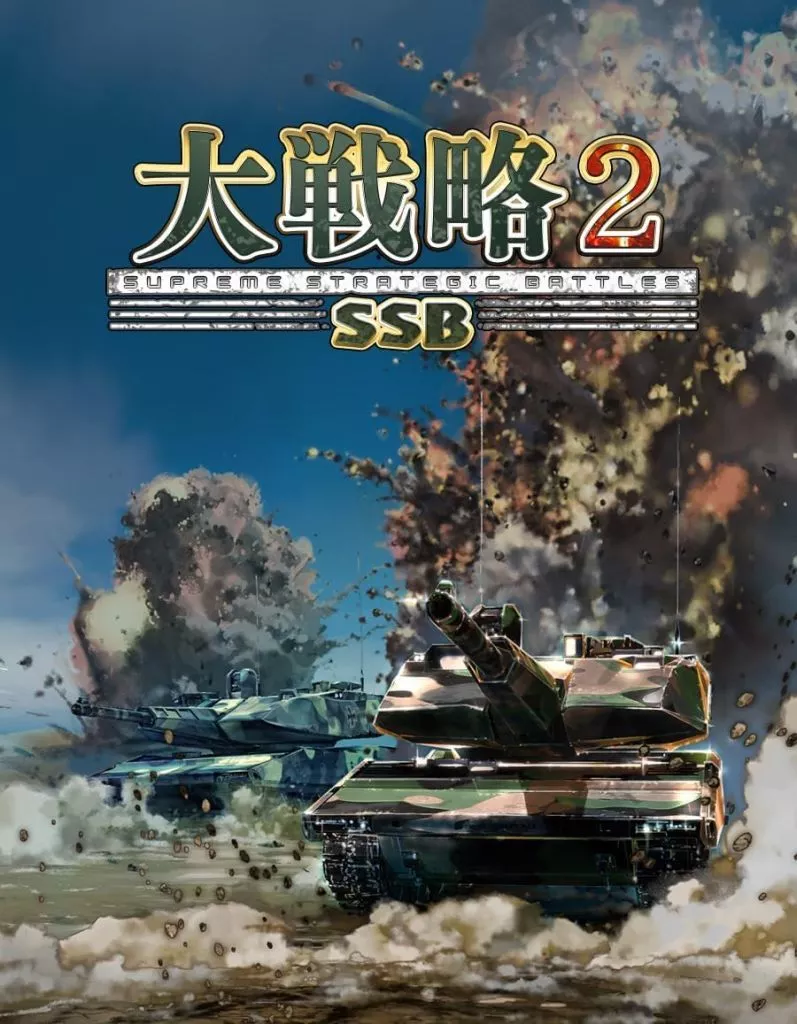 Daisenryaku Series
▸
Related Articles
-
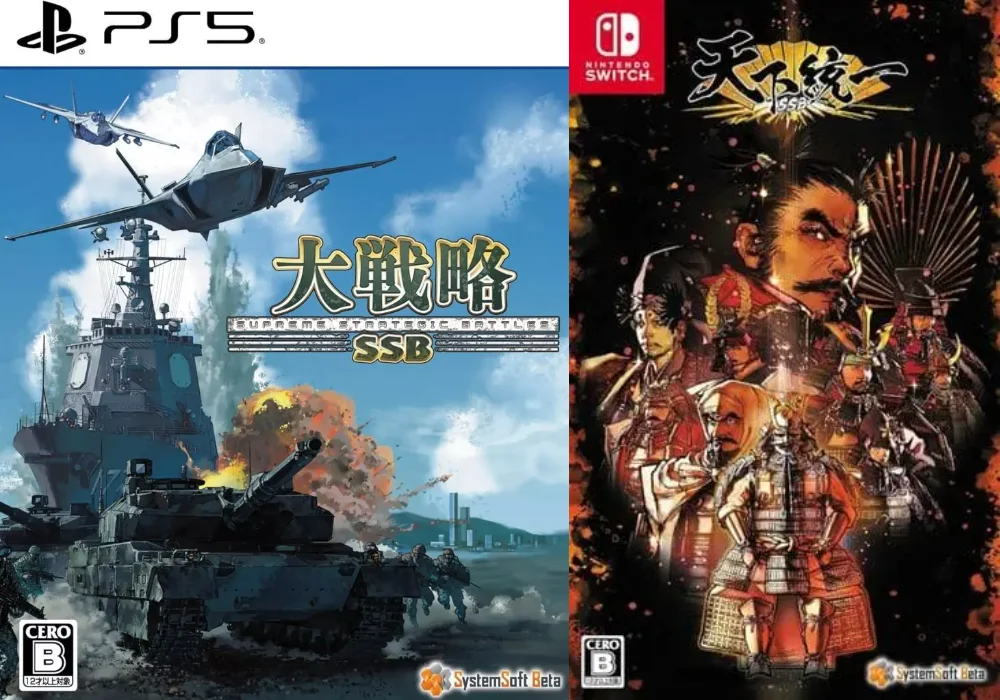 [SystemSoft beta] From the Former Name SystemSoft Alpha to the Current One! A Look at SystemSoft beta, Now Active as a Subsidiary of Nippon Ichi Software!2026-01-17 Saori
-
 【GENKI】 A Game Maker That Has Released Numerous Racing Games! What Kind of Company is GENKI, Which Also Expands into Pachinko and Mobile Business?2024-02-15 Saori
-
 【SystemSoft Alpha】Known for Numerous Historical Simulations and Bishoujo Games! What is the Currently Inactive SystemSoft Alpha?2024-01-08 Saori
-
 【Sammy】Known for more than just games in Japan, Sammy is also famous for developing pachinko machines! Here are the classic game series brought to you by Sammy!2023-11-09 Saori
Popular Articles
-
 【TATSUJIN】Named After a Legendary Game! A Rising Game Developer Founded by Former Staff! What Kind of Company is TATSUJIN?2025-03-24 Saori
-
 [DESIRE] The legendary PC game arrives in a physical edition! DESIRE remaster ver. is now on sale, featuring not only new CGs but also improvements like shortcut buttons and one-touch controls to make the massive scenario easier to read!2026-03-25 Saori
-
 【3A Company】A Highly Rated Domestic Device Manufacturer! Check Out Recommended Products from 3A Company!2025-03-30 Saori
-
 [TECHNICAL GROUP LABORATORY] Developing game software as part of its operations! Let's unravel the history of the long-established communications company, TECHNICAL GROUP LABORATORY!2026-04-10 Saori
-
 Magical fantasy RTS is revived beautifully! In addition to high resolution, new systems such as "Great Magic" with the power to turn the war situation around and a "Skill Tree" to strengthen familiars are added! GrimGrimoire OnceMore appears on Switch!2026-09-07 Saori
-
 [Epic Records Japan] Once collaborated with Nintendo to develop video games! What kind of titles did this now-inactive game division of Epic Records Japan release?2025-06-11 Saori