
[DigiCube] They invented the now-commonplace system of buying games at convenience stores! This is DigiCube, the former game maker!
[DigiCube] They invented the now-commonplace system of buying games at convenience stores! This is DigiCube, the former game maker!
2026-04-17
[DigiCube] They invented the now-commonplace system of buying games at convenience stores!
This is DigiCube, the former game maker!
If someone asked, ”Where did people buy games in the past?”, many might think of specialty stores or electronics retailers. However, DigiCube was the entity that broke through that common sense. Established in 1996 by the famous Square, this company realized the style of ”buying games at convenience stores,” which is becoming commonplace now, in a form that was quite advanced for its time. The experience of being able to get games and related products at a convenience store you happened to stop by was a surprise for users and, at the same time, an entrance to a new way of enjoying them.
The interesting thing about DigiCube lies in the fact that it did not stop at mere game sales. It played a role in supporting entertainment from various angles, from soundtrack CDs of Square works and strategy guides—the so-called ”Ultimania” series—to the development of original games. Furthermore, the fact that renowned companies such as the former Enix, Namco, and Capcom, and even Culture Convenience Club had invested in it conveys just how much attention this company was receiving from the industry as a whole.
Don’t you think the company name ”DigiCube” has a slightly mysterious ring to it? Actually, this name layers the images of Digital, Square, and a ”Cube” representing diversification. It feels as though it isn’t just a naming choice, but an expression of the intent to ”develop beyond a single form.” In fact, looking at its activities, the consistent stance of expanding beyond the framework of games is impressive.
From a business perspective as well, DigiCube was taking on quite unique challenges. Against the backdrop of falling software production costs, they adopted a system of accepting returns from retailers while maintaining a style of basically selling at list price. Furthermore, by utilizing convenience store POS systems, they deployed a rational distribution strategy to grasp actual demand with high precision and reduce unsold stock. It is clear that they were a company seriously thinking about ”how to deliver products without waste,” rather than just expanding their sales network.
Another thing that cannot be overlooked is the initiative called ”DigiCube Channel.” This was a system that distributed game promotional videos to terminals in convenience stores via CS broadcasting, serving as a forerunner to what we now call digital signage. It was a very advanced attempt for the time, and the experience of being exposed to information about new releases while at the storefront must have been fresh for many people.
DigiCube handled more than just games, including the sale of music CDs, gravure DVDs, and even PC software. In addition, they were actively involved in the field of information dissemination, such as taking over the publication of the game magazine ”PlayOnline” in 2000. Looking at it this way, it is clear that they functioned not just as a distribution company, but as a ”comprehensive hub for delivering entertainment.”
Although it is a company that has disappeared today, looking back at its initiatives makes one realize that they included many ideas that could be called the prototypes of today’s digital sales and distribution. If those challenges of that time hadn’t existed, the current way of enjoying entertainment so easily might have taken a slightly different form. Considering that, DigiCube was perhaps not just a single company, but an entity that illuminated the trends of the times from one step ahead.
Full of party games! Click here for DigiCube's software lineup!
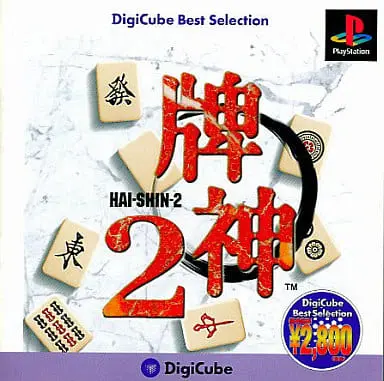
Hai-Shin
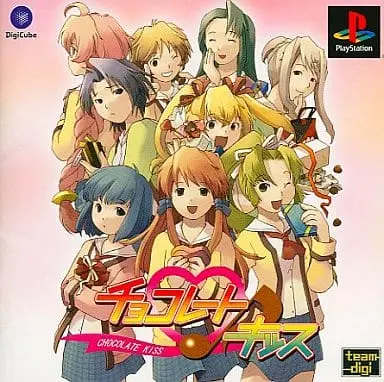
Chocolate Kiss
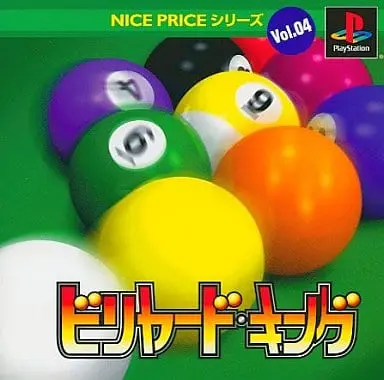
BILLIARD KING
▸
Related Articles
-
 【Chatnoir】 Speaking of long-established Mahjong game makers, this is the place! Spreading the fun of Mahjong to the world with over 20 years of history2026-01-25 Saori
-
 【Mahjong × Arcade】 The once wildly popular arcade mahjong game is now fully playable on console! Idol Janshi Suchie-Pai includes four titles in one package!2025-08-23 Saori
-
 [DigiCube] Bringing Games Closer and Easier to Purchase! What Kind of Company Was DigiCube, Which Laid the Foundation for Today's Innovations?2024-08-14 Saori
-
 【Aques】Currently a company in Japan dealing with the sale, collection, and rental of game consoles! Here's Aques' software lineup!2024-04-30 Saori
-
 【I'MAX】A Former Game Manufacturer! Packed with Super Retro NES Software! What was the software lineup of I'MAX, which released many tabletop games?2024-04-26 Saori
-
 【UPL】The Once-Existent Game Developer! Now, its Game Rights Inherited by Hamster, Here's the Software Lineup of Famicom Games Released by UPL!2024-04-12 Saori
Popular Articles
-
 Magical fantasy RTS is revived beautifully! In addition to high resolution, new systems such as "Great Magic" with the power to turn the war situation around and a "Skill Tree" to strengthen familiars are added! GrimGrimoire OnceMore appears on Switch!2026-09-07 Saori
-
 [Epic Records Japan] Once collaborated with Nintendo to develop video games! What kind of titles did this now-inactive game division of Epic Records Japan release?2025-06-11 Saori
-
 【3A Company】A Highly Rated Domestic Device Manufacturer! Check Out Recommended Products from 3A Company!2025-03-30 Saori
-
 [DESIRE] The legendary PC game arrives in a physical edition! DESIRE remaster ver. is now on sale, featuring not only new CGs but also improvements like shortcut buttons and one-touch controls to make the massive scenario easier to read!2026-03-25 Saori
-
 [TECHNICAL GROUP LABORATORY] Developing game software as part of its operations! Let's unravel the history of the long-established communications company, TECHNICAL GROUP LABORATORY!2026-04-10 Saori
-
 【TATSUJIN】Named After a Legendary Game! A Rising Game Developer Founded by Former Staff! What Kind of Company is TATSUJIN?2025-03-24 Saori