
【VIRTUAL BOY】 Released on July 21, 1995! A home console supporting 3D stereoscopic vision that was talked about for being too far ahead of its time! What is the history of the VIRTUAL BOY, whose latest version is also on sale?
【VIRTUAL BOY】 Released on July 21, 1995! A home console supporting 3D stereoscopic vision that was talked about for being too far ahead of its time! What is the history of the VIRTUAL BOY, whose latest version is also on sale?
2026-07-26
【VIRTUAL BOY】Released on July 21, 1995!
A home console supporting 3D stereoscopic vision that was talked about for being too far ahead of its time!
What is the history of the VIRTUAL BOY, whose latest version is also on sale?
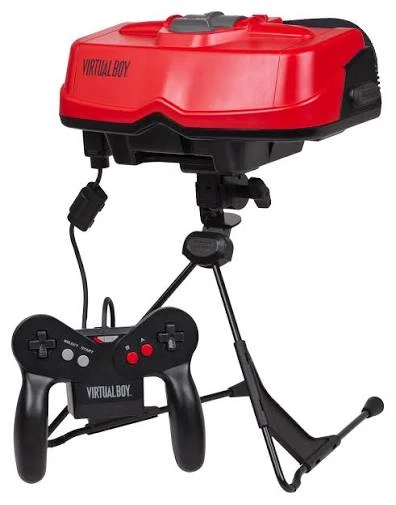
Looking back at video game history, you sometimes encounter products that make you think, ”the times just couldn’t keep up with this.” One of the prime examples of this is the Virtual Boy, released by Nintendo in 1995. Many people might know it by name alone, but surprisingly few have actually played it. Although it left a strong impression as a console that wasn’t highly acclaimed at the time, learning about its mechanisms and concepts again reveals a charm that can’t be dismissed as just a rare piece of hardware. Looking back at it from a modern perspective, you’ll encounter surprising moments one after another, thinking, ”Did they really try to realize such a challenge nearly 30 years ago?” and you can feel how fascinating of a presence it was in gaming history.
Seeing the Virtual Boy for the first time, quite a few people are surprised by its unique shape. While the main body looks like goggles, it uses a style where instead of wearing it on your head, it is set up on a dedicated stand so you look into the screen on a desk. Thanks to this structure, players could comfortably focus on the game, and the controller was designed to be held in a natural posture. Another point worth noting is the mechanism that projects different images for the left and right eyes, creating a sense of depth using human visual parallax. While the concept of 3D display is widely known today, the fact that it was incorporated into a game console back in 1995 is surprising in itself, and it can truly be called a challenge that looked toward the future.
This video game console was packed with many ideas from Gunpei Yokoi, who is known for creating the Game Boy. The concept of creating new ways to play while combining existing technologies was strongly reflected in this hardware as well. Instead of simply competing on performance, the attitude of trying to achieve ”a way to play that has never been experienced before” comes through everywhere. Although it cannot be said that it was accepted by the market at the time of its release, the value of the challenge itself never fades. When talking about the history of games, it is by no means rare for such challenging products to lead to later technological developments, and it feels as though the Virtual Boy was a prime example of that.
People who are used to modern game consoles might be surprised by the display composed solely of red and black when looking at the screen. While it looks very unique today when vibrant full color is taken for granted, it was precisely this limited palette that created a unique worldview. Although it leaves a strong initial impact, after playing for a while, the sense of discomfort mysteriously fades, and your focus shifts to the 3D depth itself. You can feel the ingenuity that went into trying to achieve maximum immersion within the technical constraints of the time, and the ability to enjoy a gaming experience with a charm different from flashy graphics can also be said to be a unique characteristic of this hardware.
Nintendo’s game consoles have produced characteristic controllers in every era, and the Virtual Boy was no exception. Its symmetrical design, along with the bold decision to place a D-pad on both sides, remains quite rare even today. At first glance, it might seem like a bizarre shape, but it was actually a design born from considering playability in 3D space and compatibility with various games. It conveys the idea that they were willing to rethink even the input methods to realize new ways to play, showing that a consistent philosophy was embedded throughout the hardware.
Although it was not a huge hit at the time of its release, the technology and concepts left behind by the Virtual Boy were by no means wasted. Looking at the 3D-compatible consoles that appeared afterward, one cannot help but imagine that this challenge was passed down to the future. Had it been released in combination with today’s high-performance LCD technology and video technology, it might have received a completely different evaluation. Success alone does not make history; bold challenges sometimes pave the way for the next era. The Virtual Boy is truly a symbol of that, making it a one-of-a-kind console that any game fan would want to take a look at at least once.
Actually, there are surprisingly many games!
Click here for past titles of the original Virtual Boy!
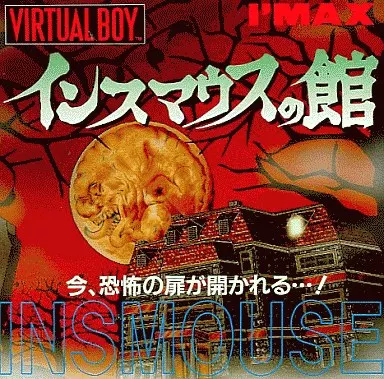
Innsmouth no Yakata
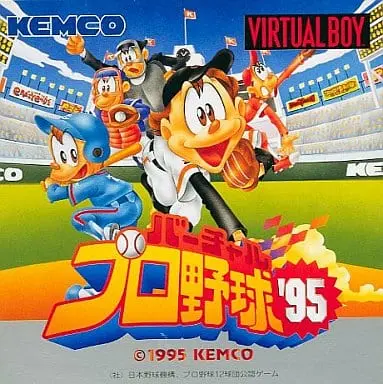
Virtual Pro Yakyu '95 Professional Baseball (Virtual League Baseball)
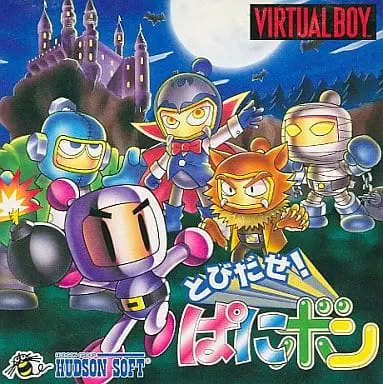
Tobidase! Panibon
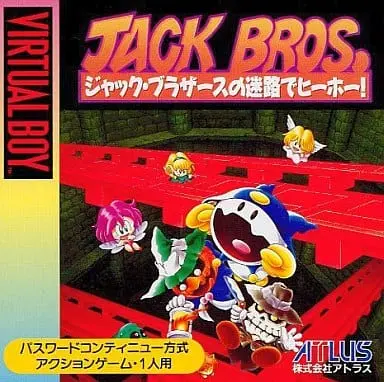
Jack Brothers' Hee-Ho at the Labyrinth!
▸
Video Game Software,
VIRTUAL BOY,
Virtual Pro Yakyu '95 Professional Baseball (Virtual League Baseball),
Innsmouth no Yakata,
Jack Brothers' Hee-Ho at the Labyrinth! (Jack Bros.),
Tobidase! Panibon (Bomberman: Panic Bomber)
Related Articles
-
 【Benesse】 Actually secretly involved in game development too! What kind of company is Benesse Holdings, Inc., which reigns supreme as the largest educational material manufacturer in Japan?2026-10-18 Saori
-
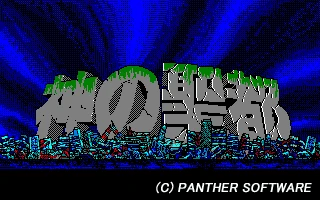 【Panther Software】 A retro lineup featuring PC games, PlayStation, and more! Here is what kind of developer Panther Software was, having released many romance simulation games!2026-07-25 Saori
-
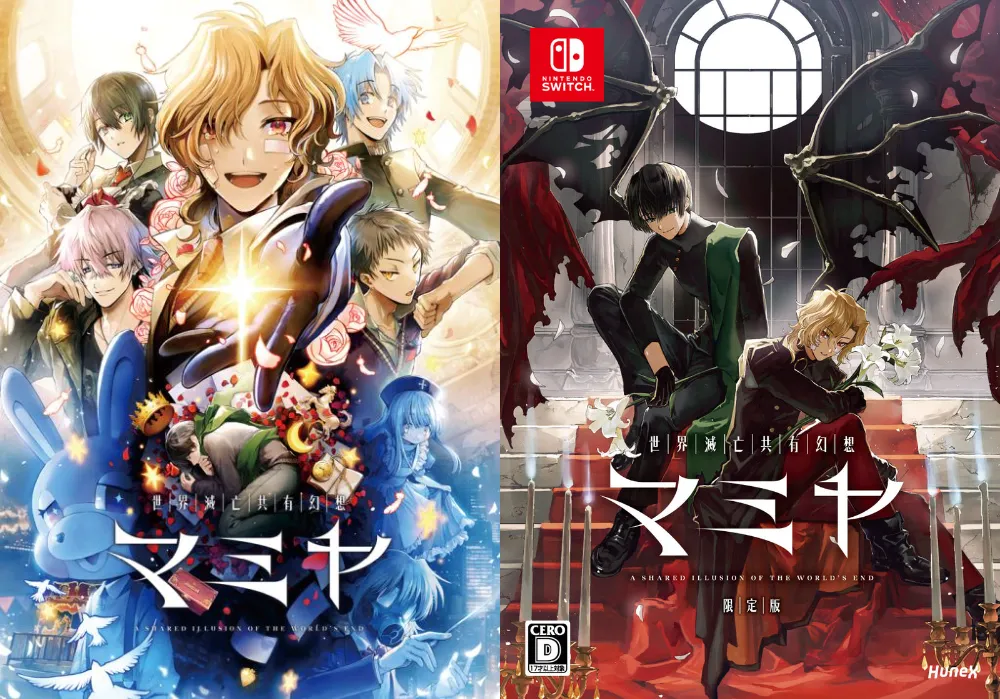 [Dark Fantasy] The talked-about title is being ported to Switch! Unravel the mystery of the children calling themselves Mamiya! MAMIYA - A Shared Illusion of the World's End - is coming soon!2026-03-28 Saori
-
 [DESIRE] The legendary PC game arrives in a physical edition! DESIRE remaster ver. is now on sale, featuring not only new CGs but also improvements like shortcut buttons and one-touch controls to make the massive scenario easier to read!2026-03-25 Saori
-
 If you’re starting Starry Sky from scratch, this is it! Including not only the main story but also the fan disk scenarios, and even the drama CD version! Starry☆Sky Spring Memories, with stills refreshed into high-quality CG, is now on Switch!2026-02-23 Saori
-
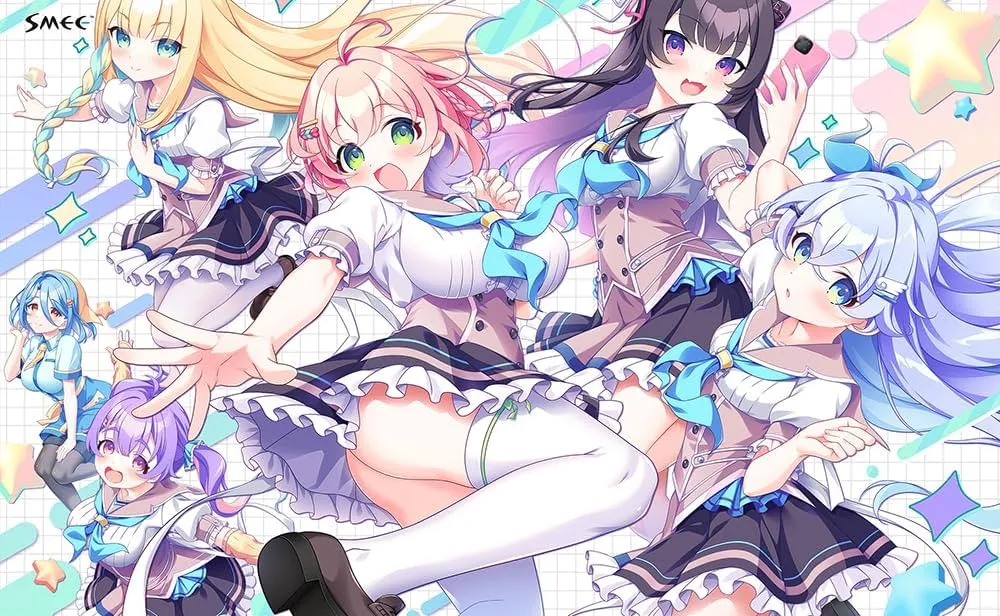 [Lovepical-Poppy!] Manage a dormitory and run a cafe, but it's not just a romance game! With over 20 girls, who you get close to is up to you! The brand's 15th-anniversary game, Lovepical-Poppy!, is now on Switch!2026-02-15 Saori
Popular Articles
-
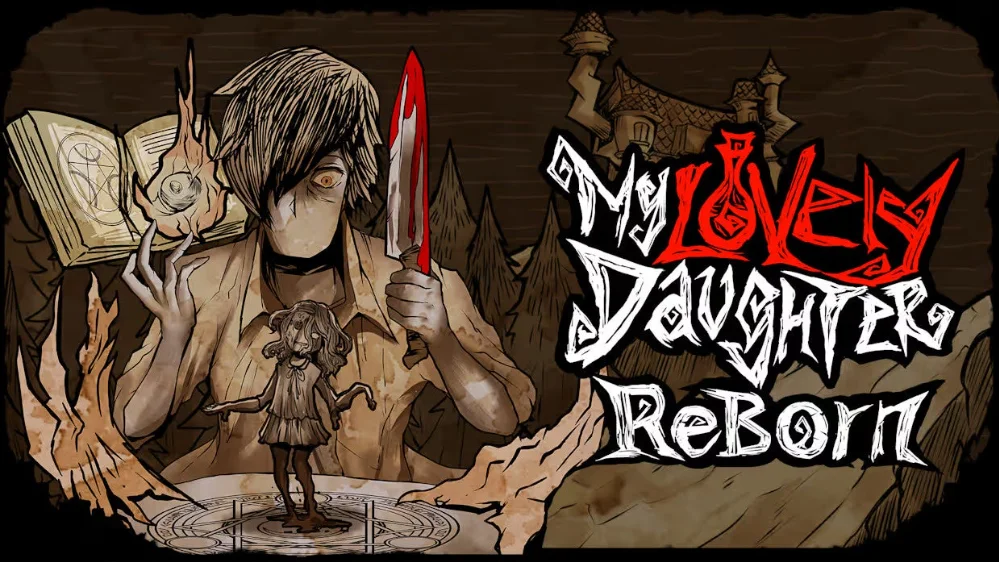 【Alchemy】 Let's fulfill the taboo alchemy of a father who lost his daughter. My Lovely Daughter Reborn, with numerous further brush-up elements added toward the packaged version, decided to go on sale!2026-10-10 Saori
-
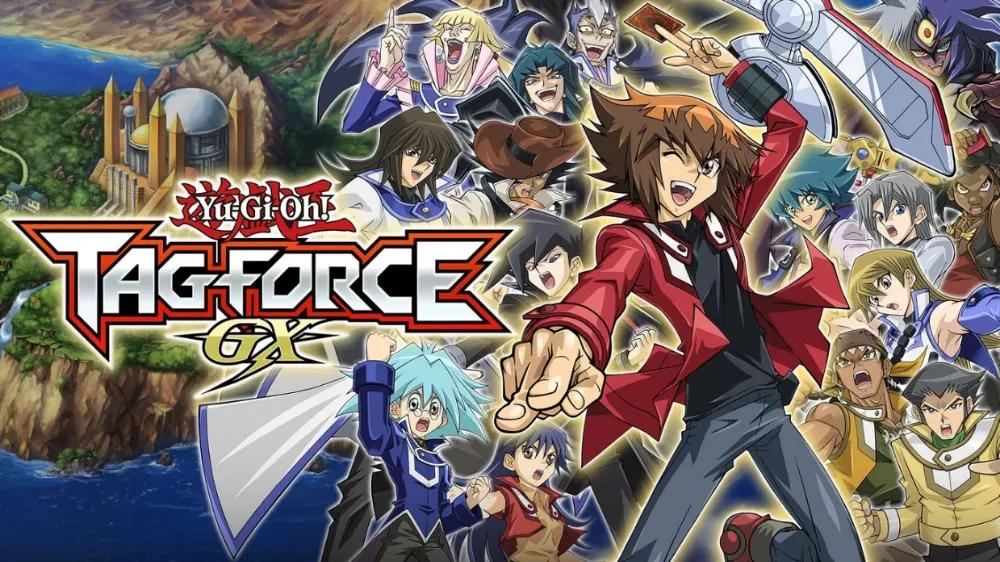 【Yu-Gi-Oh! GX】 Those battles, friends, and the academy revive packed with additional elements! Equipped with online battle functions, Yu-Gi-Oh! TAG FORCE GX making battles with rivals all over the world possible decided to go on sale!2026-10-07 Saori
-
 【THQ Japan】A Once-Dissolved Game Company Revives as a Brand! What is THQ (Japan), Expanding Globally?2025-03-26 Saori
-
 【TECMO】The Predecessor of KOEI TECMO GAMES! A Company Known for Creating Masterpieces in a Wide Range of Genres, from Simulation to Horror to Fighting Games!2023-11-17 Saori
-
 【VICTRIX】 Now Expanding in Japan! Discover VICTRIX's Top Gaming Devices!2025-03-29 Saori
-
 【TATSUJIN】Named After a Legendary Game! A Rising Game Developer Founded by Former Staff! What Kind of Company is TATSUJIN?2025-03-24 Saori