
【PolyGram】Now Absorbed into Universal Music! What Kind of Maker Was PolyGram, Which Once Released Live-Action Retro Games?
【PolyGram】Now Absorbed into Universal Music! What Kind of Maker Was PolyGram, Which Once Released Live-Action Retro Games?
2026-11-16
【PolyGram】Now Absorbed into Universal Music! What Kind of Maker Was PolyGram, Which Once Released Live-Action Retro Games?

Hit songs that captivate music fans around the world. Behind them is the existence of record companies that have discovered talented artists and delivered their music to the world. When talking about the history of the music industry, one name that cannot be forgotten is ”PolyGram.” PolyGram was a global record company that developed with bases in the Netherlands and Germany, and later moved its headquarters to the United States. Some of you might think, ”I've never heard the name, so what kind of company is it?” In fact, it is a company that brought numerous major labels under its umbrella and spread music of diverse genres—such as funk, R&B, and rock—to the world. This time, let's take a close look at the appeal of PolyGram, from its birth and growth to the achievements it left in the music industry.
The history of PolyGram began in 1962. The starting point was when Germany's Siemens and the Netherlands' Philips, which were leading European companies at the time, merged their respective music divisions. The development of major companies from different countries joining hands to nurture a single music business is quite fascinating, isn't it? However, it wasn't named PolyGram from the very beginning. The name came into use in 1972. In other words, the name known today appeared about 10 years after the business was born. Backed by technological capabilities and music business experience cultivated in Europe, the fact that it grew across national borders is a characteristic unique to this company.
Indispensable to knowing the appeal of PolyGram are the numerous major labels that existed under its umbrella. Representative among them are Mercury Records and Polydor Records. You might wonder, ”Are there even more labels inside a record company?” However, by developing multiple brands, its great strength was being able to accommodate a variety of music genres and artists. Rather than relying solely on a specific musical style, it built a system capable of releasing a wide range of works to the world. Precisely because musical tastes vary from person to person, business development that values diversity holds great significance. This flexible stance became an important element supporting its global success.
Entering the 1970s, PolyGram actively pushed forward with its expansion into the American market. From here began a true era of leaps and bounds. In popular genres such as funk, R&B, and rock, it led numerous singles and albums to become hits, increasing its presence in the music industry. The sight of a company born in Europe achieving success in the massive American music market is truly impressive. Moreover, its growth was not limited to the sales of works. While taking on the challenge of new markets, it expanded its business scale and evolved into a company that influenced the global music business.
What further accelerated PolyGram's momentum was the acquisition of major independent labels. By welcoming A&M Records, Motown, and others under its umbrella, it further expanded the breadth of the music it handled and its business foundation. By the mid-1990s, it had grown into one of the world's leading giant record companies. Particularly noteworthy is that it did not simply increase its corporate scale, but incorporated labels with different histories and individualities. The strategy of turning the musical culture cultivated by each brand into a business strength can be called a characteristic symbolizing PolyGram's management.
Although PolyGram grew into a global record company, it faced a major turning point in 1998. It was absorbed into Universal Music, bringing an end to its journey as an independent giant record company. However, the track record it had built up until then did not disappear. Its history of expanding its business from Europe to the United States and delivering diverse music while gathering major labels holds important meaning when considering the development of the music industry. Perhaps PolyGram's greatest appeal lies in its spirit of challenge, which captured the changes of the times and expanded the possibilities of music on a global scale. When enjoying music, if you also turn your attention to the history of the company that brought that work into the world, your usual favorite song might sound just a little bit different.
Developed Primarily Around the PlayStation! Here Are PolyGram's Representative Works!
Twin Goddesses
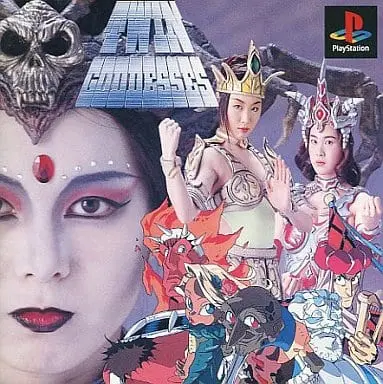
Eko Eko Azarak

VIRUS
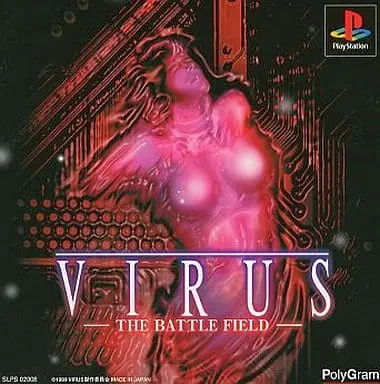
▸
Popular Articles
-
 【Vertical Scrolling Shooting】An authentic scrolling shooting game born in 2020! Pre-orders have started for the popular shooting game Aleste, where you can enjoy a special version with arrangements, adjustments, and additional elements for home consoles!2026-11-08 Saori

-
 【Final Fantasy Series】A new journey, wishes, and... revenge. The series' first HD-2D work re-recorded for the Switch version! Final Fantasy Resonance, where various formidable enemies and hidden contents await you, release decided!2026-11-04 Saori
-
 【PC Engine】Released on October 30, 1987! What is the history of PC Engine, a stationary game console released by NEC Home Electronics that showed off cutting-edge visual beauty of those days!?2026-10-31 Saori
-
 【Yuuki Sakuna】Streaming mode and nurturing mode! Let's support Sakuna with 2 elements! Drawn with an original story, the growth story with Yuuki Sakuna, Sakunaverse release decided!2026-11-02 Saori
-
 【Otome Game】Featured new work! Connect all foreshadowing completely, and expose the “Truth” that the nation tried to hide! Crime suspense romance ADV Sin of Astraea starts accepting pre-orders!2026-11-11 Saori
-
 【TATSUJIN】Named After a Legendary Game! A Rising Game Developer Founded by Former Staff! What Kind of Company is TATSUJIN?2025-03-24 Saori