
[Beautiful Girls × Movie-Class] It is a novel game, a movie, and becomes a story only for you. The game maker sprite's 15th anniversary commemorative work, Koganei-sou to Konjiki no Agehachou is now accepting pre-orders!
[Beautiful Girls × Movie-Class] It is a novel game, a movie, and becomes a story only for you. The game maker sprite's 15th anniversary commemorative work, Koganei-sou to Konjiki no Agehachou is now accepting pre-orders!
2026-05-29
[Beautiful Girls × Movie-Class] It is a novel game, a movie, and becomes a story only for you.
The game maker sprite's 15th anniversary commemorative work, Koganei-sou to Konjiki no Agehachou is now accepting pre-orders!
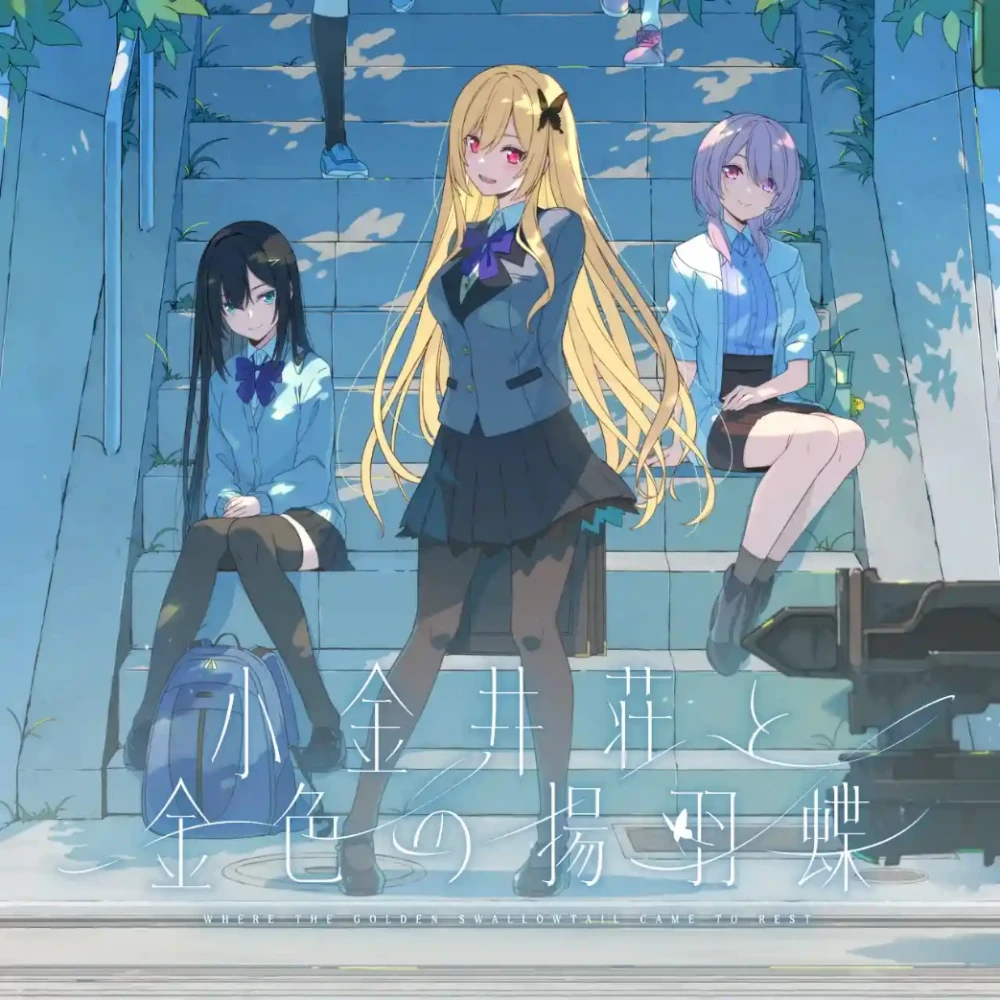
First of all, the stage setting is unfair. The high ground of Inamuragasaki, three hundred stone steps, and the old share house ”Koganei-sou” beyond that. At this point, the scent of the sea breeze and the color of the dusk already float into your head. Moreover, the protagonist Yuto continues to protect that house where the memories of his deceased family remain. It's not a mere ”residence,” but a place that embraces the past itself. Precisely because of that, even a single daily conversation among the residents carries a strange warmth. It is lively yet slightly lonely. While this sense of atmosphere lies on the extension of the youth depictions that sprite works have excelled at, it gives a further matured impression.

And the one who appears is the blonde girl, Ageha Kurosaki. Just looking at the settings, you might think, ”Is she a common wild character?” right? But her interesting aspect is that she does not end as a mere noisy heroine. She drains the hot water every time after bathing, and furthermore, tries to settle it with money. While it is comical when cutting out just that action, it is somehow atypical, and there is even a scariness where the root of her values is shifted from others. This sense of discomfort gradually spreads ripples into the quiet space called Koganei-sou.
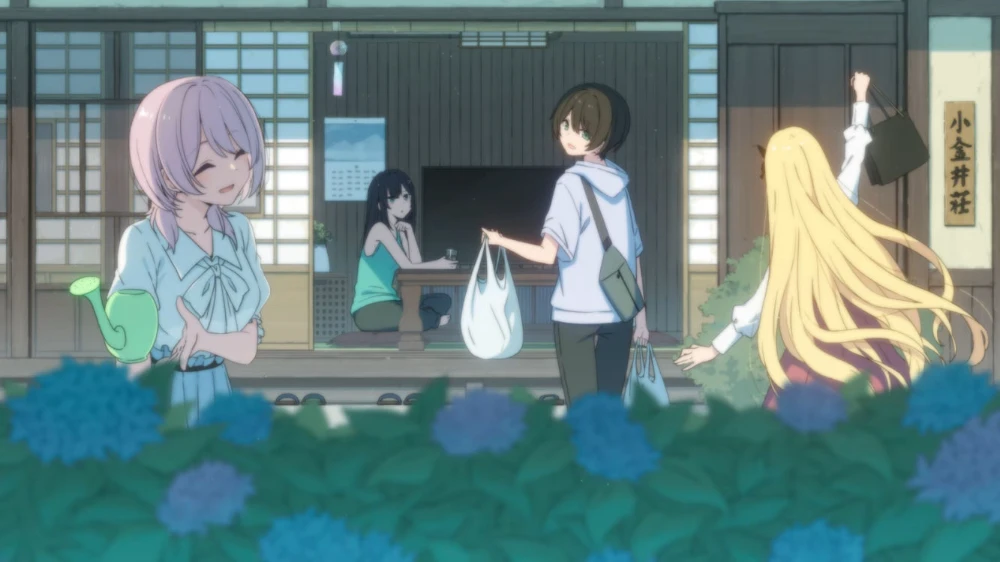
Moreover, this work does not consume that ”shift” solely with laughter. The circumstances, pasts, and hidden emotions held by each resident are brought to light by the existence of Ageha. She is a character like a typhoon, but at the same time, she is also a detonator that moves the time that had stopped. While reading, she is the type of heroine that naturally makes you curious, thinking, ”What on earth is this girl harboring?”
The charm of this work lies in the ”atmosphere of daily life” rather than big incidents. A girl who eats extra-large portions nonchalantly, an older sister who is way too perfect, and an oddly too specific buyout amount—”156,500,388 yen.” Such a number would normally turn into a gag, yet it is наоборот unsettling. It is extremely skillful at mixing a slightly surreal discomfort into a realistic sense of daily life.

Therefore, players find themselves stepping deeper and deeper into the daily life of Koganei-sou. Surely this work is not the type to push through solely with flashy developments. The time someone stands in the kitchen, the conversations at dusk, and even the breathing while climbing the stairs are all part of the story. This kind of ”work that makes you feel the atmosphere” is actually quite precious.
What particularly caught my personal attention is the concept of ”FILMIC NOVEL.” Recently, an enormous volume has become a matter of course for both games and videos, but on the other hand, the number of people who say ”it's too long to play” is also increasing. In response to that, this work has dared to compete with ”density.”
This does not simply mean ”it is on the shorter side.” I think it is a design that drives in peaks of emotion continuously within a limited time. Moreover, the music is by Elements Garden. Since they are a team with a reputation for creating melodies that heighten emotions, I highly anticipate how it gears together with the visual direction. This work will probably become a game to ”immerse yourself in” rather than to ”read.”
People who liked ”Aokana: Four Rhythm Across the Blue” or ”Love, Election and Chocolate” should be all the more attracted to this work. However, it is not a mere rehash of past works. Not only the brightness of youth, but ”the pain of moving forward while harboring what was lost” is strongly felt.
What is particularly impressive is the theme, ”Overcoming the unforgettable past, living the present you do not want to forget.” From this single sentence alone, you can tell that this work is not a mere romance game, but a work that depicts ”time” itself. A summer different from last year. A story that accepts that change pierces deeper into players who have aged more.

In novel games, there are works where only specific scenes strangely remain even after you finish playing. The color of the sea, someone's lines, or the silence of dusk. I have a premonition that ”Koganei-sou to Konjiki no Agehachou” is going to be exactly that kind of work.
Koganei-sou to Konjiki no Agehachou
Popular Articles
-
 [TECHNICAL GROUP LABORATORY] Developing game software as part of its operations! Let's unravel the history of the long-established communications company, TECHNICAL GROUP LABORATORY!2026-04-10 Saori
-
 [DESIRE] The legendary PC game arrives in a physical edition! DESIRE remaster ver. is now on sale, featuring not only new CGs but also improvements like shortcut buttons and one-touch controls to make the massive scenario easier to read!2026-03-25 Saori
-
 【VICTRIX】 Now Expanding in Japan! Discover VICTRIX's Top Gaming Devices!2025-03-29 Saori
-
 【3A Company】A Highly Rated Domestic Device Manufacturer! Check Out Recommended Products from 3A Company!2025-03-30 Saori
-
 【TATSUJIN】Named After a Legendary Game! A Rising Game Developer Founded by Former Staff! What Kind of Company is TATSUJIN?2025-03-24 Saori
-
 【THQ Japan】A Once-Dissolved Game Company Revives as a Brand! What is THQ (Japan), Expanding Globally?2025-03-26 Saori